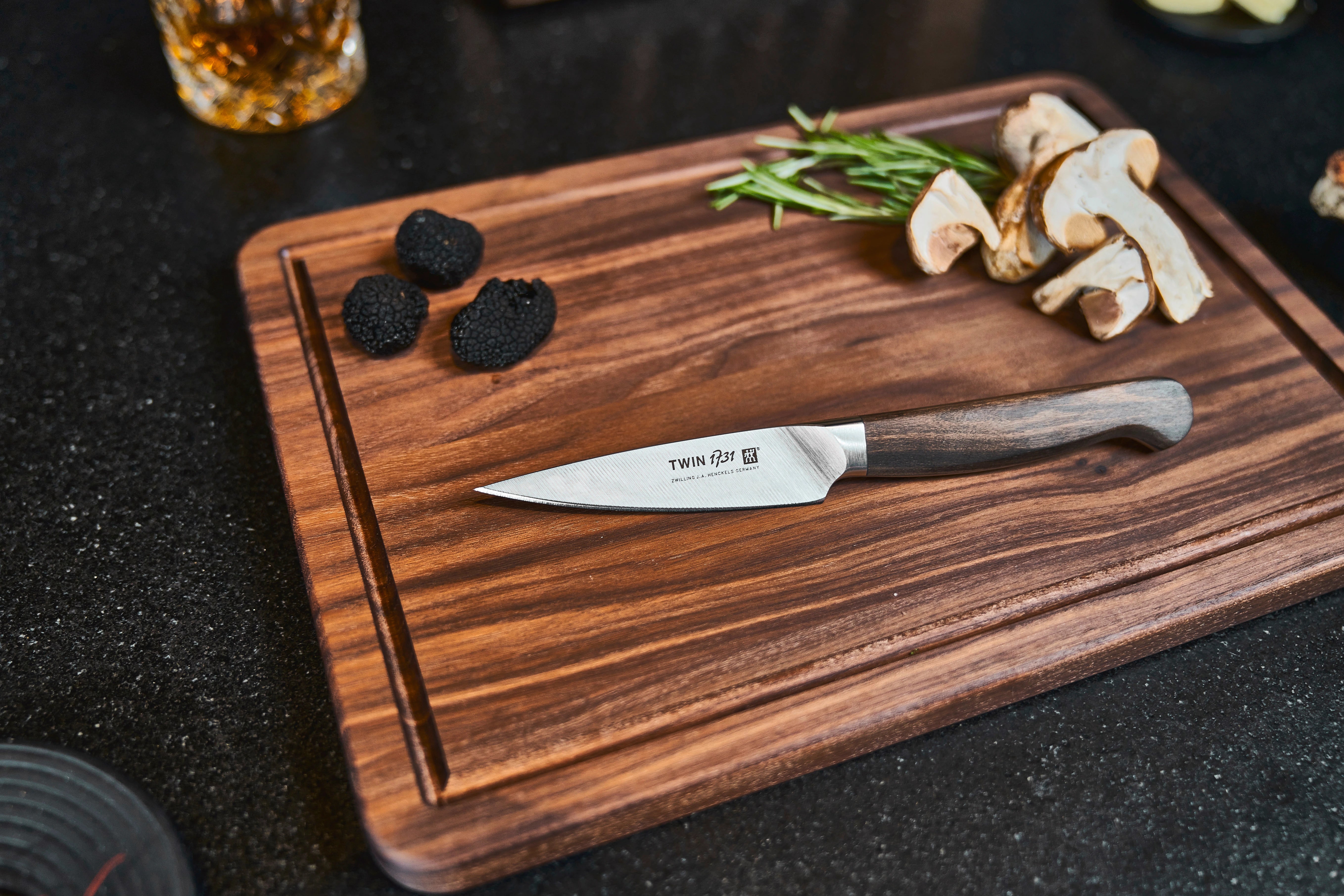

Zwilling Diplôme Knives
The collaboration with Cordon Bleu
Designed and developed in co-operation with the world-renowned Le Cordon Bleu culinary academy. Perfect for aspiring chefs, catering students and the ambitious home cook. Each knife is expertly crafted using FC61 stainless steel, celebrated for its durability and resistance to wear. The steel undergoes the FRIODURx2 ice-hardening process, significantly enhancing its hardness and maintaining its pristine condition over time. The edge of each knife is meticulously honed following the traditional Japanese Honbazuke method, which involves a three-stage sharpening process that sharpens the blade from tip to heel, ensuring an exceptionally razor-sharp edge with a precise angle.
The handles of the Diplôme knives are as thoughtfully designed as the blades themselves, emphasizing ergonomics and comfort. Made from maintenance-friendly plastic, the handles are ergonomically shaped to ensure comfort and control during extended use. They are built with a full-tang construction and secured with three rivets, providing robustness and a timeless look. Additionally, subtle blue lines adorn each side of the tang, adding an elegant touch that signifies the prestigious collaboration with Le Cordon Bleu and enhancing the overall aesthetic appeal of the knives.
Key Features
- Zwilling Pro Rockwell Rating 60-62 HRC
- Expert CraftsmanshipThe steel undergoes the FRIODURx2 ice-hardening process
- Ergonomic Handles: Ergonomically designed handles offer balance and control
- Material FC61 stainless steel

FAQs
Zwilling knives, renowned for their quality and precision, are used by a wide range of individuals, from home cooks to professional chefs. Here are a few notable users, including celebrity chefs:
- Gordon Ramsay: The famous British chef, known for his fiery temper and exceptional culinary skills, has been seen using Zwilling knives in various settings. His preference for high-quality kitchen tools aligns well with Zwilling's reputation for precision and durability.
- Jamie Oliver: Another well-known British chef and restaurateur, Jamie Oliver, has also been associated with using Zwilling knives. Oliver's approach to cooking, which emphasizes simplicity and quality ingredients, is complemented by the reliable performance of Zwilling knives.
- Culinary Schools: Many culinary schools around the world, including prestigious ones, often equip their kitchens with Zwilling knives. These schools recognize the importance of providing their students with top-notch tools to learn and practice their culinary skills.
- Professional Chefs and Restaurants: Numerous professional chefs and high-end restaurants globally prefer Zwilling knives for their reliability and precision. These chefs require tools that can withstand the rigors of a professional kitchen and maintain their sharpness and efficiency over long periods.
- Home Cooks and Enthusiasts: Zwilling knives are not just for professionals; they are also popular among home cooks and cooking enthusiasts. The brand offers a range of knives that cater to various needs and skill levels, making them a preferred choice for many who are passionate about cooking at home.
Maintaining your Zwilling knives involves several essential practices to ensure they stay sharp, durable, and in top condition:
- Cleaning: Always wash your Zwilling knives by hand with warm water and mild detergent immediately after use. It's important to avoid using the dishwasher, as the harsh environment can damage both the blade and the handle over time. After washing, dry the knives completely with a soft cloth to prevent any rust formation.
- Honing: Regular honing is key to keeping your Zwilling knives sharp and maintaining their edge. Use a honing steel before or after each use to realign the blade's edge. Hold the steel vertically and gently slide the knife down and across the steel at a 20-degree angle.
- Sharpening: In addition to regular honing, your Zwilling knives will need periodic sharpening, typically once or twice a year depending on how frequently you use them. You can sharpen your knives using a whetstone, a handheld sharpener, or opt for professional sharpening services.
- Storage: Proper storage is crucial for the longevity of your knives. Store your Zwilling knives in a knife block, on a magnetic strip, or within protective sheaths. This not only prevents the blades from dulling but also helps avoid accidents. Storing knives in a drawer is not recommended, as they can easily get damaged.
- Cutting Surface: To maintain the sharpness of your knife edges, always use wooden or plastic cutting boards. Cutting on hard surfaces like glass, metal, or stone can quickly dull your knives.
- Avoid Misuse: Remember that Zwilling knives are specifically designed for cutting food. Avoid using them for any non-food related tasks, as this can damage the blade and potentially void the warranty.
- Handle with Care: Always be mindful of the knife's balance and handle it with care. Avoid dropping or carelessly tossing your knives, as this can lead to damage to both the blade and the handle.
Shop at Cotswold Knife Company with confidence, knowing we are a verified stockist of Zwilling knives.